```
Showing posts with label Self Improvement. Show all posts

Life is a 35-Minute Flight: The Art of Emotional Hustle

Life is a 35-Minute Flight: The Art of Emotional Hustle

I was sitting by the window, and my friend was in the first seat; the middle seat was empty. I asked the air hostess, "Can we two sit together?" The flight attendant smiled and replied, "Sir, this seat is booked; you can adjust the seat with the passenger after takeoff." We started waiting for the passenger. A few moments before the plane's doors closed, that passenger arrived. He was a large, heavyset elder; he also looked ill.

I offered him, "You take the window seat, we friends want to sit together," but he shook his head, rejected my offer, and sat down heavily right in the middle. He was bulging out from both sides. Because of him, I got pressed against the wall of the plane, while my friend hung half-out of his seat. An unpleasant odor was also coming from the fat man's body. He was breathing with his mouth wide open, and the movement of his breath was spreading the smell into the environment. Our conversation stopped. I took a rosary out of my pocket and began reciting, while my friend opened his mobile phone and sat back. That was the most difficult flight of my life.

I spent that journey in agony. When we landed in Lahore, I counted my bones and ribs and took a breath of relief. We came out of the airport. I asked my friend, "How was the journey?" He laughed and said, "Great! I have downloaded books on my mobile phone; I kept reading a book during the journey." I asked, "Were you not disturbed because of the fat man?" He laughed and said, "It happened for the first two minutes, but then I adjusted. I wedged my elbow and ribs into his stomach and quietly kept reading the book." I asked, "And were you not disgusted by his foul smell either?" He laughed and said, "In the beginning I was, but when I got lost in the book, the smell stopped coming." I looked at him in astonishment and then said, "But I kept facing distress during the entire journey; even my breathing was getting tangled. I kept praying to Allah, 'O Allah, when will this journey end?'"

He laughed and said, "I too used to get troubled in such situations, but then I found a solution to my worry. I now adjust." I stopped and began looking at him intently. He said, "We were companions of that fat man for only 35 minutes. He came, sat, the plane flew, the plane landed, and we parted ways. Who was he, where did he come from, and where did he go? We do not know. If you had adjusted to those 35 minutes, you would not have been in pain." He paused, took a long breath, and said, "Every pain of ours has an expiry time. If we estimate that time, our pain decreases. For example, when that fat man sat between us, I immediately calculated the time. I realized this is a pain of only 35 minutes. Therefore, instead of focusing on the fat man's obesity, I started reading a book. My pain ended in a few minutes. You should also estimate the duration of pain; your difficulty will also become easier."

"Every pain of ours has an expiry time. If we estimate that time, our pain decreases. Calculate the duration of that distress and apply your attention to some constructive work."

I asked him, "From whom did you learn this art?" He laughed and said, "I learned this art from my father. In my childhood, a quarrelsome person moved into our neighborhood. We used to play cricket in the street, and he would uproot our wickets, snatch our ball, and he would come out into the street and shut down our game altogether. I used to be very heartbroken. One day, I complained about him to my father. My father placed his hand on my head and said, 'Son, this person is a tenant; he has come, and he will leave. Instead of fighting and entangling ourselves with him, we should wait for his departure.' I asked my father, 'Should I not even protest?' He said, 'Yes, you certainly may, but it will be your loss. This person will leave at his own time, but because of the protest, you will become ill-tempered. You won't be able to enjoy life after that. Therefore, my advice is to focus on your life; pay attention to your happiness. These and people like them will keep coming and going; they are here today and won't be here tomorrow. What is the need for you to spoil your mood?' I was a child, so I did not agree with my father's words, but our neighbor really left after two months, and thus we started playing in the street with the old spirit. We even forgot that irritable old grouch in two weeks."

During all this, I also kept going to my office peacefully, raised my children, and also kept enjoying the pleasures of life. After telling me this incident, my father often used to say, 'Whenever you fall into distress, calculate the duration of that distress and apply your attention to some constructive work; that distress will not feel like distress to you.' I took my father's words to heart; therefore, I extracted the duration of pain and diverted my attention toward some constructive work. He became silent.

This point was both new and unique for me. I asked him, "Is this your routine?" He burst into laughter and said, "Yes, whenever someone causes me pain, I say in my heart, 'This is today's issue; it will not be here tomorrow. Why should I ruin my today and tomorrow because of it?' and my pain disappears." I asked, "For example?" He said, "For example, that fat person was a pain for only 35 minutes. We only had to spend 35 minutes, and that pain was to exit from our lives. For example, if someone cheats me, I laugh at both that person and the deception and walk forward. Believe me, that deception and that person both become a forgotten tale for me after a few days. I found countless difficult bosses and terrible colleagues in my career. Looking at every difficult boss, I used to say, 'He has come, and he will leave. What is the need for me to ruin my life?' I always kept thinking about the terrible colleague as well, 'He is the shortest passenger of a short journey; he will disembark at his destination, or I will go on to my stop. What is the need for me to fight him?' Believe me, my difficult bosses left, and the terrible colleagues too, and thus my journey continued. My life passed with pleasure and is passing with pleasure." He paused, laughed, and said, "You too take this reality to heart: life is a 35-minute flight. Do not ruin your journey because of a fellow passenger. Look at the duration of the pain and divert your attention to another direction; your life will also pass well." I nodded my head in agreement.

He sat in his car, and I went to my office, but from that day until today, whenever I fall victim to any problem or any pain, I repeat in my heart, 'This is a 35-minute flight; it will end, and I will soon forget this pain. Tomorrow I won't even remember that I once sat next to such a passenger because of whom my breath was stopped and who had pasted me against the wall like a poster.' The journey of life is extremely short. If we turn this short journey into a register of complaints, this short journey will become difficult. We will disembark thousands of miles behind our destination. Therefore, let it go—let those who cause pain go, and let yourself go too. Focus only on the journey, and believe that our difficulty and our pain will end.
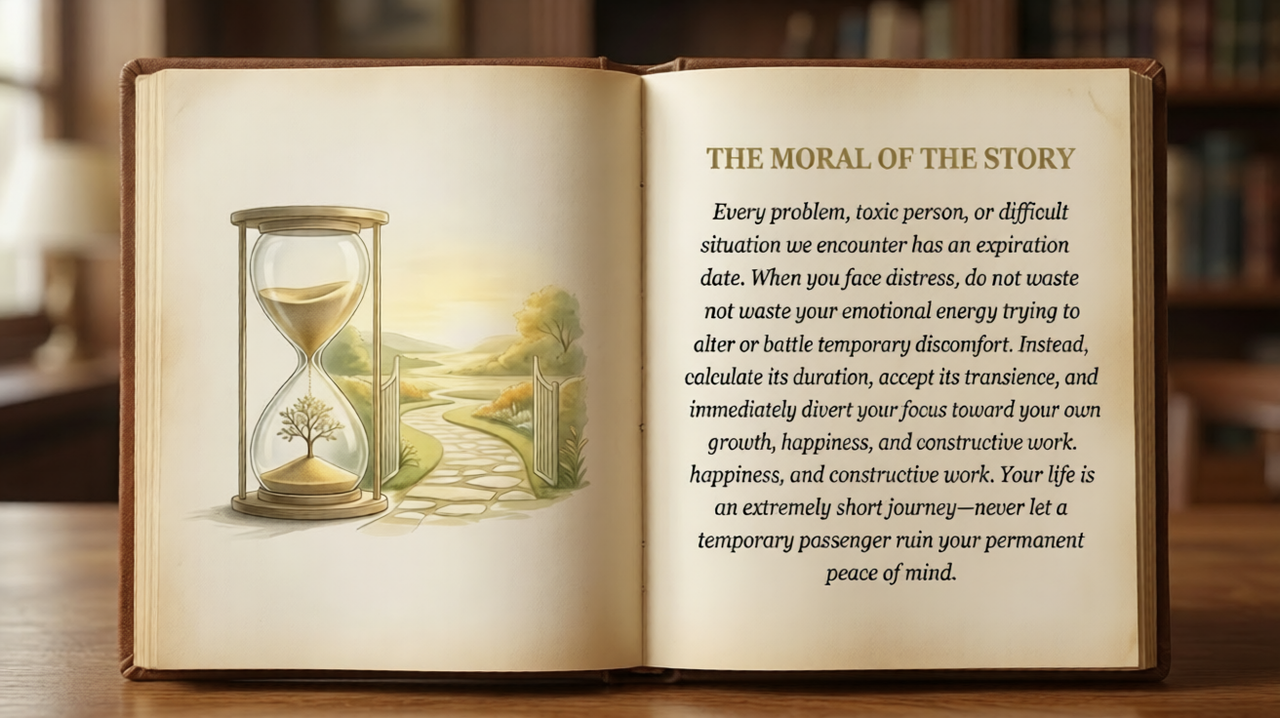
The Moral of the Story
The Moral of The Story Graphic
Share:

The Focused Creator: How to Eliminate Digital Distractions and Execute Daily.

The Focused Creator: How to Eliminate Digital Distractions and Execute Daily 

The internet was supposed to make us more productive. Instead, many of us open a laptop to write one paragraph and somehow end up watching a video titled “Why Medieval Villagers Slept in Two Shifts.” Two hours had disappeared. The task remains untouched. Our brain feels like a browser with 47 tabs open, one of them playing music we cannot find. 

That is the modern creator’s battle. 

The Focused Creator overcoming digital distractions and avoiding online business mistakes.
Writers, designers, entrepreneurs, bloggers, YouTubers, students, freelancers, and remote workers are all fighting the same invisible enemy: digital distraction. Notifications, endless scrolling, emails, Slack messages, trending videos, algorithm-driven feeds, and constant multitasking are destroying attention spans. Recent productivity research shows that more than half of workers experience distractions every 30 minutes or less, while phone notifications remain one of the biggest interruptions during focused work.  

The scary part is not just wasting time. It has lost momentum. 

A distracted creator rarely executes consistently. And without consistency, talent means very little. 

This article breaks down how we can reclaim focus, eliminate digital distractions, and finally execute daily with clarity and discipline without turning life into a robotic productivity cult. 

Why Digital Distractions Are Destroying Modern Creativity 

The creator’s greatest asset is not talent. It is not intelligence either. It is sustained attention. The ability to sit with a problem long enough to produce meaningful work has become incredibly rare. We live in a culture where every app competes aggressively for our focus. Social platforms are engineered to keep us scrolling. Streaming services autoplay content before we even decide what we want to watch. Notifications arrive like tiny digital mosquitoes buzzing around the brain all day. 

Research published in workplace productivity reports found that 62% of employees identify phone notifications as a major distraction, while many workers struggle to focus for longer than 30 minutes without interruption.  

That explains why many creators feel constantly “busy” yet strangely unproductive. 

We often mistake motion for progress. Answering emails feels productive. Reorganizing folders feels productive. Watching “productivity hacks” on YouTube feels productive. But real execution usually looks boring. It involves sitting quietly and doing one meaningful thing repeatedly. 

The attention economy profits from interruption. Every distraction steals cognitive energy from deep thinking. Even a quick glance at Instagram can fracture momentum. And once momentum breaks, rebuilding concentration becomes exhausting. 

The modern creator does not lack information. We are drowning in it. 

The real challenge is protecting mental clarity long enough to produce original work. 

The Attention Economy Is Designed Against Us 

Think about this honestly. Billion-dollar companies hire behavioral psychologists, UX engineers, and AI systems to maximize your screen time. Your attention is literally a commercial product. 

That means your inability to focus is not simply laziness. 

Infinite scroll, autoplay, algorithmic recommendations, dopamine-trigger notifications, and personalized feeds are intentionally engineered to keep us emotionally hooked. Reddit productivity discussions repeatedly highlight how removing recommendations and social feeds dramatically reduces distraction time for users.  

This creates a strange paradox. 

We want to create meaningful work, but the devices we use are optimized for consumption, not creation. 

A laptop can either become a writing machine or a distraction casino, depending on how we configure it.

Why Multitasking Is a Productivity Trap 

Multitasking sounds impressive until you realize it usually means “doing multiple things badly.” 

Our brains do not truly multitask. They rapidly switch contexts. Every switch drains energy. Studies and productivity discussions consistently show that task-switching severely damages concentration and increases mental fatigue.  

Imagine trying to cook dinner while someone changes the stove temperature every thirty seconds. That is what multitasking does to creative thinking. 

Creators often believe they are working because they are constantly active. But activity and execution are not identical. 

A focused creator finishes. 

A distracted creator merely reacts. 

The Real Cost of Constant Distraction 

A clean workspace desk with a phone put away to eliminate digital distractions during a 90-minute deep work block.
Digital distractions cost far more than wasted hours. They quietly erode confidence. 

There is a specific emotional exhaustion that comes from repeatedly abandoning meaningful work. You start doubting your discipline. You begin believing you are inconsistent by nature. Eventually, unfinished projects pile up like abandoned construction sites in your mind. 

That emotional clutter becomes heavy. 

Research around digital distraction shows people frequently experience busyness without meaningful progress. That sentence hits painfully hard because many creators recognize themselves immediately. 

We answer messages all day, yet still avoid one important task that actually changes our lives. 

Mental Fatigue and Attention Residue 

Attention residue is one of the biggest hidden productivity killers. 

When we switch tasks, part of the brain remains mentally attached to the previous activity. So even after closing social media, fragments of attention linger behind. This explains why creators often feel mentally scattered even in silence. 

A Reddit productivity discussion described this perfectly: after interruptions, the brain continues processing fragments from previous content, making the next work session weaker.  

This constant fragmentation creates exhaustion that sleep alone cannot fix. 

Your brain never fully settles. 

The Emotional Damage of Unfinished Work 

Unfinished work creates psychological tension. 

Every incomplete article, abandoned business idea, half-edited video, or postponed project quietly occupies mental space. Over time, creators stop trusting themselves. They lower expectations because repeated inconsistency hurts. 

That is why execution matters emotionally, not just professionally. 

Finishing things builds identity. 

When we consistently execute daily, we slowly become the kind of person who trusts their own words. 

Understanding the Psychology of Focus 

Focus is not magic. It is a trained cognitive behavior. 

Most people wait for motivation before working. That is backwards. Action usually creates motivation, not the other way around. 

Dopamine and Instant Gratification 

Social media trains the brain to expect constant novelty. Every refresh offers unpredictable rewards like messages, trending content, outrage, humor, and validation. 

This reward cycle conditions us to crave stimulation. 

Deep work feels slower by comparison because meaningful work often has delayed rewards. Writing a great article may take hours before feeling satisfied. Building a business may take years before showing major results. 

The brain naturally prefers immediate gratification. 

That is why creators instinctively check notifications during difficult work. 

Why Deep Work Feels Uncomfortable 

Many people assume focus should feel pleasant immediately. Usually, it does not. 

The first 15 to 20 minutes of concentrated work often feel mentally resistant. The brain searches for easier stimulation. That discomfort is normal. 

Creators who understand this stop panicking during resistance. 

Focus is not the absence of discomfort. It is the ability to remain present despite it. 

Creating a Distraction-Free Digital Environment 

Discipline matters. The environment matters more. 

If distractions remain one click away, eventually, willpower collapses. The solution is designing systems that reduce temptation automatically. 

Decluttering Devices 

A cluttered device creates a cluttered mind. 

Creators should aggressively simplify digital environments. 

Cleaning Your Phone 

Your phone should not resemble Times Square. 

Remove unnecessary apps. Disable non-essential notifications. Move distracting applications away from the home screen. Use grayscale mode if social apps feel addictive. 

Several productivity discussions online report that making distractions harder to access significantly improved focus and execution.  

The goal is not to become anti-technology. 

The goal is intentional technology. 

Cleaning Your Browser 

Browsers become distraction portals fast. 

Open tabs multiply like rabbits. News feeds quietly consume attention. Recommendation algorithms drag us sideways. 

Simple fixes work surprisingly well: 

  • Use website blockers during work hours  

  • Keep separate work and entertainment browser profiles  

  • Close unnecessary tabs immediately  

  • Remove social media bookmarks  

  • Disable autoplay videos  

These small changes reduce friction between intention and execution. 

Turning Notifications into Enemies 

Most notifications are not urgent. 

They simply create artificial urgency. 

Every notification interrupt thought patterns. Research shows that constant digital interruptions reduce deep focus and productivity significantly.  

Creators should treat notifications carefully, almost like toxic background noise. 

Silence creates space for thinking. 

And thinking is where meaningful work begins. 

Building a Daily Execution System 

Motivation is unreliable. Systems are dependable. 

Creators who execute consistently usually rely on routines, not emotional inspiration. 

The One-Task Rule 

One meaningful task completed daily beats ten partially finished tasks. 

Every morning, identify the single task that matters most. Protect it aggressively. 

That one task might be: 

  • Writing 1,500 words  

  • Editing a video  

  • Designing a landing page  

  • Recording a podcast  

  • Publishing content  

The important part is completion. 

Execution compounds faster than perfection. 

Delegate the Noise to Elevate Your Focus

Delegate to Elevate business graphic showing outsourcing strategies for online entrepreneurs.

Time blocking works because it removes ambiguity. 

Instead of vaguely planning to “work later,” creators schedule focused sessions intentionally. 

Example: 

Time 

         Task 

8:00 AM - 10:00 AM 

                       Deep work writing session 

10:00 AM - 10:30 AM

                       Email and messages 

11:00 AM - 1:00 PM 

                       Editing and publishing 

2:00 PM - 3:00 PM 

                       Research and planning 

Simple structure reduces decision fatigue.

Using Focus Sessions Properly 

Short focus intervals often outperform marathon work sessions. 

Many creators benefit from 45- to 90-minute-deep work blocks followed by intentional breaks. 

The key detail is this: 

Breaks should restore attention, not destroy it. 

Scrolling TikTok during a break is like taking a “rest” by running into traffic. 

Walk. Stretch. Drink water. Breathe. Let the nervous system settle. 

How Successful Creators Protect Their Attention 

High-performing creators rarely rely on chaotic workflows. 

They build protective routines around focus. 

Rituals That Reduce Decision Fatigue 

Small rituals create mental stability. 

Some creators light a candle before writing. Others use noise-canceling headphones. Some begin every session with coffee and a notebook. 

These rituals signal the brain that it is time for deep work. 

Consistency matters more than complexity. 

Why Simplicity Beats Motivation 

Complicated productivity systems often collapse quickly. 

Simple systems survive stress. 

A creator who writes daily for one hour consistently will outperform someone waiting for perfect inspiration every weekend. 

Execution thrives inside simplicity. 

The Role of Digital Minimalism 

Digital minimalism is not about abandoning technology. 

It is about using technology deliberately instead of compulsively. 

Consuming Less to Create More 

The more content we consume, the harder original thinking becomes. 

Creators sometimes overload themselves with tutorials, opinions, trends, and endless inspiration. Eventually the mind becomes noisy. 

Silence matters. 

Some of the best ideas appear after stepping away from screens entirely. 

The Importance of Intentional Technology 

Technology should serve goals, not hijack them. 

Ask simple questions: 

  • Does this app improve my life?  

  • Does this platform help me create?  

  • Does this tool support my goals or distract them?  

These questions sound basic, but they reveal uncomfortable truths quickly. 

 Sustainable Focus Without Burnout 

Extreme productivity culture often glorifies exhaustion. 

That approach eventually fails. 

Rest as a Productivity Tool 

Rest is not laziness. It is neurological maintenance. 

Research increasingly shows that sustainable productivity depends on healthy work patterns and recovery periods.  

Sleep improves concentration. Exercise improves cognition. Walking improves creativity. 

Burned-out creators cannot produce meaningful work consistently. 

Rebuilding Attention Span Gradually 

Attention span works like a muscle. 

If years of scrolling weaken concentration, rebuilding focus takes time. 

Many people report noticeable improvements after several weeks of reduced digital distraction and intentional focus practice.  

Start small. 

Twenty focused minutes daily can eventually become two hours of deep work. 

Consistency reshapes the brain slowly but powerfully. 

 Conclusion 

The focused creator is not necessarily the smartest person in the room. 

Usually, they are simply people who learned how to protect attention in a distracted world. 

Digital distractions will not disappear. Notifications will continue to buzz. Algorithms will continue competing for attention. The internet will remain loud, addictive, and endlessly stimulating. 

But creators who intentionally design their environment, simplify their workflow, and commit to daily execution gain an enormous advantage. 

Because while everyone else reacts constantly, focused creators build. 

They published it. 
They finish. 
They execute. 

And over time, execution changes everything. 

FAQs 

How can creators stop getting distracted online? 

Creators can reduce online distractions by disabling notifications, using website blockers, removing addictive apps, and scheduling dedicated deep work sessions. Simplifying digital environments dramatically improves concentration. 

What is the best method for improving focus daily? 

The most effective approach combines time blocking, single-tasking, distraction-free work sessions, and consistent routines. Focus improves through repetition, not motivation alone. 

Why is multitasking harmful for productivity? 

Multitasking forces the brain to switch contexts repeatedly, which reduces efficiency, increases fatigue, and weakens concentration. Deep work requires sustained attention on one task. 

How long does it take to rebuild attention span? 

Many people notice improvements within two to three weeks of reducing digital distractions and practicing focused work consistently. Long-term attention recovery depends on habits and the environment. 

What tools help eliminate digital distractions? 

Website blockers, focus timers, grayscale phone settings, distraction-free writing apps, and notification management tools all help creators maintain concentration and execute daily tasks more effectively. 


Share:
Chat with us on WhatsApp

Total Pageviews

Popular Posts

Blog Archive

Recent Posts

Featured Post

Nutrition, Dignity and Longevity

Nutrition, Dignity, and Longevity: An Integrated Perspective 1. Overview When we speak of “nutrition,” we often focus on calories, vitamins,...